Live · multi-tenant SaaS
ClinSupplyCompass
Closed-loop clinical-supply planning, proven against the 130-sheet workbook it replaced.
- Python
- FastAPI
- PostgreSQL · RLS
- HTMX
- Anthropic Claude
- Supabase
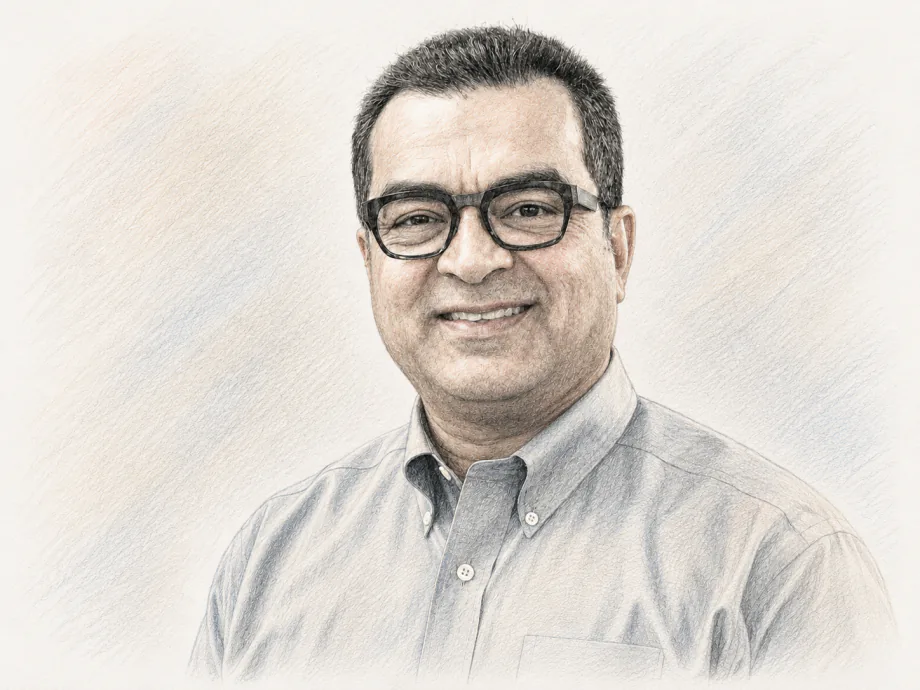
Hello, and welcome in. I’m
I design systems, build them myself, and lead the teams that ship them.
I came into software from mechanical engineering, so I think about a system the way you would think about a machine, with real parts, real limits, and a habit of surprising you the moment you look away. For about thirty years I’ve built the consequential kind, for hospitals, banks, utilities, and federal agencies. The sort that has to keep running long after everyone has gone home. And the whole time, I never split the architect from the engineer. I draw the design, and I write the code that carries the weight.
These last few years I’ve pointed all of that at AI: taking generative and agentic systems from a promising demo to something you can actually trust in production, where a wrong answer has consequences. That is the work I care about now, making AI real rather than just impressive. And after all this time, I still write code most days. I expect I always will.
Right now I’m building generative and agentic AI on top of real enterprise systems.
Come on in
No wrong door. Start anywhere.
What I build, what I’m thinking about, and who I am when the laptop is closed. Pick a door. They all lead somewhere real.
Thirty-odd years designing and shipping software that has to keep running, for hospitals, banks, utilities, and federal agencies. I came to it from mechanical engineering, and I never stopped writing code.
Four systems I designed and built end to end, from clinical-supply planning to a home-care platform. Each has a short “behind the build” with the architecture and the decisions that actually mattered.
Thinking out loud about the parts of the work I'm still figuring out. Retrieval, agents, evaluation, and the craft underneath. Writing is how I find out what I actually think.
A quiet listening room I built. It searches the world's public radio by genre, artist, or song and plays it live, right here. Leave something on while you read.
Outdoors as often as I can manage. Time at the range, the long stalk in the bushveld, and the kind of days where the phone has nothing to say.
The other discipline I keep coming back to. The dishes I actually cook, most of them over fire, saved off a phone and adjusted and cooked again.
A bit about me
The last few years tell it best. I’ve been taking generative and agentic AI from a promising demo to something large companies can trust in production, the retrieval, the workflows, and the testing that keeps it honest. I can do that because of everything that came before it: three decades of building the quiet, consequential kind of software for hospitals, utilities, federal agencies, and banks, the sort that has to keep running long after launch.
What I’ve learned, over and over, is that the hard part is rarely the technology. It’s turning uncertain business requirements into software people can depend on. That takes a team, and I lead the way I like to be led: in the work, alongside everyone else, sharing the accountability through delivery.
More about me →Things I've built
Designed, shipped, and, mostly, run by me.
Different projects, but the way I build stays the same. Keep the important logic dependable, keep a clear record of what happened, and let AI help rather than make the final call. Each one has a short “Behind the Build” if you want to see how it came together.
Live · multi-tenant SaaS
Closed-loop clinical-supply planning, proven against the 130-sheet workbook it replaced.
Live · free pilot
A private, verified matrimonial platform: a public site, a member PWA, and an operator console over one API.
Pre-launch
A multi-tenant operating platform for a home-care agency: operator, caregiver, and family, over one auditable workflow.
For sale · in negotiation
A productized planning-and-booking experience for guided hunts, built as a transferable commercial asset.
October 9, 2026 · 12 min read
Thirty seats. Two guests. One last spot. Follow Claude Code from your Mac to the cloud as it plans, builds, and checks an event-planner feature.
Claude Code · Sequential Thinking · MCP
September 25, 2026 · 26 min read
A birthday in Karachi. A wedding guest list. A diary entry from thirty years ago. LifeLedger begins with a simple wish: ask a question of the life you have already documented.
Go · RAG · Ollama
September 20, 2026 · 20 min read
A grounded, human guide to three ways AI systems find, reason over, and act on knowledge—from one careful search to a coordinated team of specialists.
RAG · Agentic AI · Multi-Agent Systems
Away from the desk
I’m a family man and a man of faith, and that’s the center everything else turns around. It keeps me patient, grateful, and honest about what matters.
When I can, I’m outdoors. I hunt, though not really for the trophy. It’s the discipline of it: the early mornings, the long stalk, the respect you owe the animal and the land, and the quiet that’s hard to find anywhere else.
A trip to the bushveld →What is on the desk this quarter. Some of it will end up in the writing; some will quietly fail to be useful.
Paper
Mamba: Linear-Time Sequence Modeling with Selective State Spaces
Gu & Dao
Re-reading to keep the alternatives to the transformer architecture honest in my head.
Paper
Lost in the Middle: How Language Models Use Long Contexts
Liu et al.
Useful reminder when designing retrieval contexts: the position of the answer matters as much as its presence.
Book
A Philosophy of Software Design
John Ousterhout
On modules as deep abstractions. I return to it about once a year and find something I missed.
Essay
Notes on AI Engineering
Various, around the web
Reading widely on how teams are actually putting LLMs into production. The good ones are specific; the rest are theatre.
The listening room searches the world’s public radio, by genre, artist, or song, and plays it live, right here. Good for working, reading, resting, or a long train ride. Worth a bookmark.
Maybe you’re hiring for a principal-level role, or weighing an architecture or an AI initiative, or you want an engineer who’ll own it from design all the way through to production. Whatever it is, I’d be glad to hear from you. A short paragraph about the problem is the best place to start.
No forms, no calendar links. Just a note.